Our school vision
"This is the day that the Lord has made, let us rejoice and be glad in it." Psalm 118
Our curriculum vision for Design and Technology - Our Intent
DT experiences will provide opportunities for our children to learn how to take risks and to become resourceful, innovative, enterprising. Children will have opportunity to be creative, technical and practical and see projects through to completion from the smallest design ideas.
Our pupils will acquire a broad range of subject knowledge and draw on disciplines such as mathematics, science, engineering, computing and art. Pupils learn how to take risks, becoming resourceful, innovative, enterprising and capable citizens. Through the evaluation of past and present design and technology, they develop a critical understanding of its impact on daily life and the wider world.
At Finchampstead, we ensure plenty of curriculum time is given to this subject, so that our children can be fully immersed in their Design and Technology explorations. We will work in a range of relevant contexts within school, our outdoor environment our purpose built kitchen and the wider world.
The use of the DT Association enables us to plan meaningful and progressive learning throughout the school.
Our KS1 pupils will be taught to;
-
design purposeful, functional, appealing products for themselves and other users based on design criteria
-
generate, develop, model and communicate their ideas through talking, drawing, templates, mock-ups and, where appropriate, information and communication technology
-
select from and use a range of tools and equipment to perform practical tasks [for example, cutting, shaping, joining and finishing]
-
select from and use a wide range of materials and components, including construction materials, textiles and ingredients, according to their characteristics.
-
explore and evaluate a range of existing products
-
evaluate their ideas and products against design criteria
-
use the basic principles of a healthy and varied diet to prepare dishes
-
understand where food comes from.
Our KS2 pupils will;
-
use research and develop design criteria to inform the design of innovative, functional, appealing products that are fit for purpose, aimed at particular individuals or groups
-
generate, develop, model and communicate their ideas through discussion, annotated sketches, cross-sectional and exploded diagrams, prototypes, pattern pieces and computer-aided design
-
select from and use a wider range of tools and equipment to perform practical tasks [for example, cutting, shaping, joining and finishing], accurately
-
select from and use a wider range of materials and components, including construction materials, textiles and ingredients, according to their functional properties and aesthetic qualities
-
investigate and analyse a range of existing products
-
evaluate their ideas and products against their own design criteria and consider the views of others to improve their work
-
understand how key events and individuals in design and technology have helped shape the world
-
apply their understanding of how to strengthen, stiffen and reinforce more complex structures
-
understand and use mechanical systems in their products [for example, gears, pulleys, cams, levers and linkages]
-
understand and use electrical systems in their products [for example, series circuits incorporating switches, bulbs, buzzers and motors]
-
apply their understanding of computing to program, monitor and control their products.
-
understand and apply the principles of a healthy and varied diet
-
prepare and cook a variety of predominantly savoury dishes using a range of cooking techniques
-
understand seasonality, and know where and how a variety of ingredients are grown, reared, caught and processed.
Year 1 and 2 have designed their own finger puppet and used the joining technique of sewing. It's not been easy for little fingers, but they have persevered and are so pleased with the final results. I think after reading their evaluation sheets, it's been a success!
We have enjoyed making shell structures in the shape of a famous European Landmark. We invested packaging to see how nets were used to make 3D shapes. Then we chose our monument and investigated the shapes we could see. This helped us plan how to make a shell structure. Lots of resourcefulness and resilience was needed . For a final touch, we incorporated a circuit to light up a bulb. It was a great addition to our project on Europe.
It's moon buggy time again for year 1 and 2. We've made the body - just the wheels and axles to add!
Chaffinch have investigated, designed, planned, made and evaluated a healthy sandwich based on foods eaten by Romans. We developed our questioning skills and learned new terminology before applying new skills such as chopping, spreading and grating. Our combinations were delicious �� well, mainly.
For more photos, follow the link to our class page.
Chaffinch - switches and 2d frames/reinforced materials. We linked our DT into our European topic and built a monument to light up using switches made from everyday materials.
Chaffinch - photo frames. We have enjoyed investigating materials, features and functions of photo frames. After evaluating, we planned then made our own wooden frames as Christmas gifts for our loved ones. Evaluation and review was the final step.
Goldfinch Class Summer 2021 - The World on our Plate: we investigated food sources from around the world and made meals from different countries. Which meal had the most miles to plate?
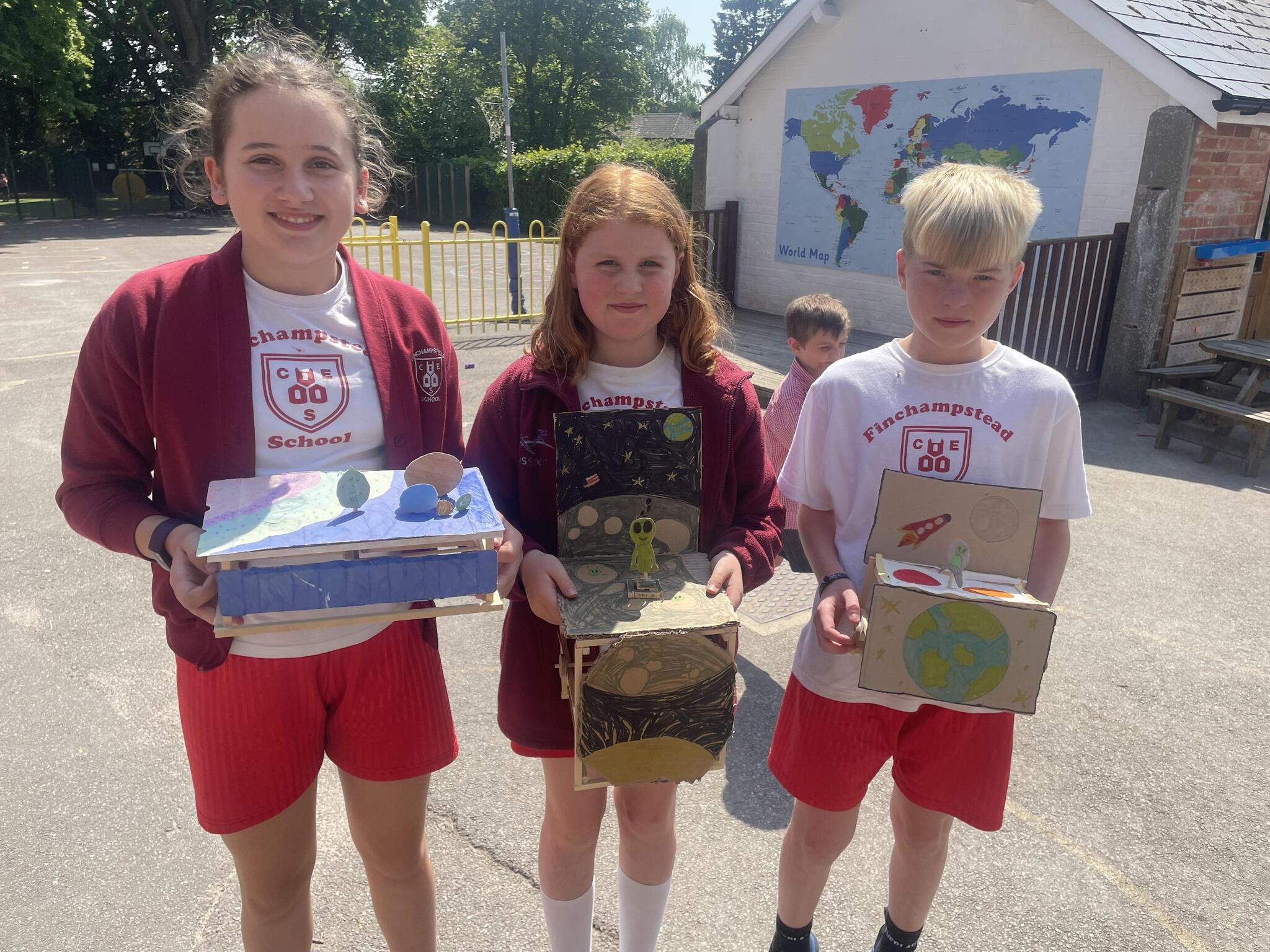
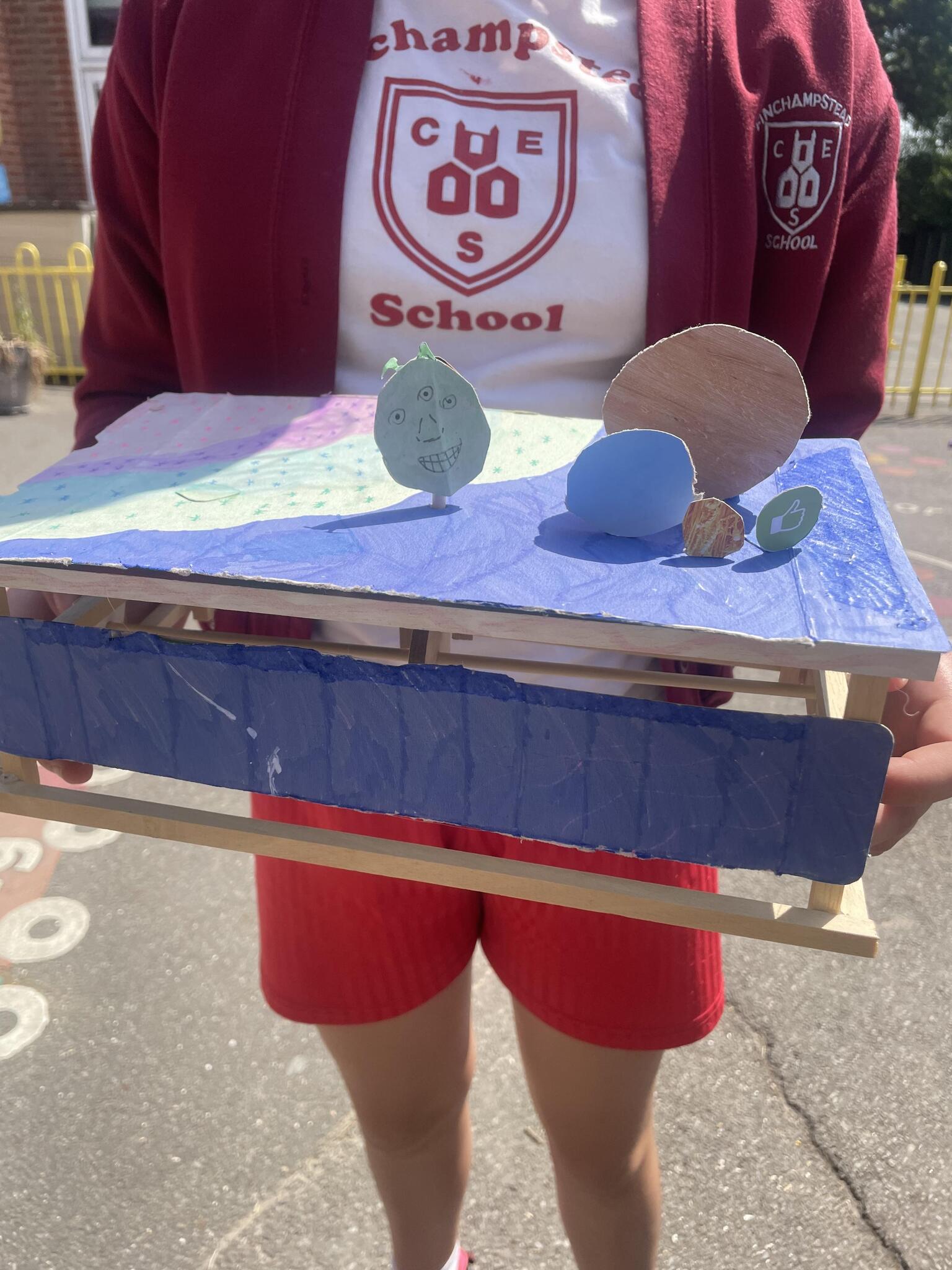
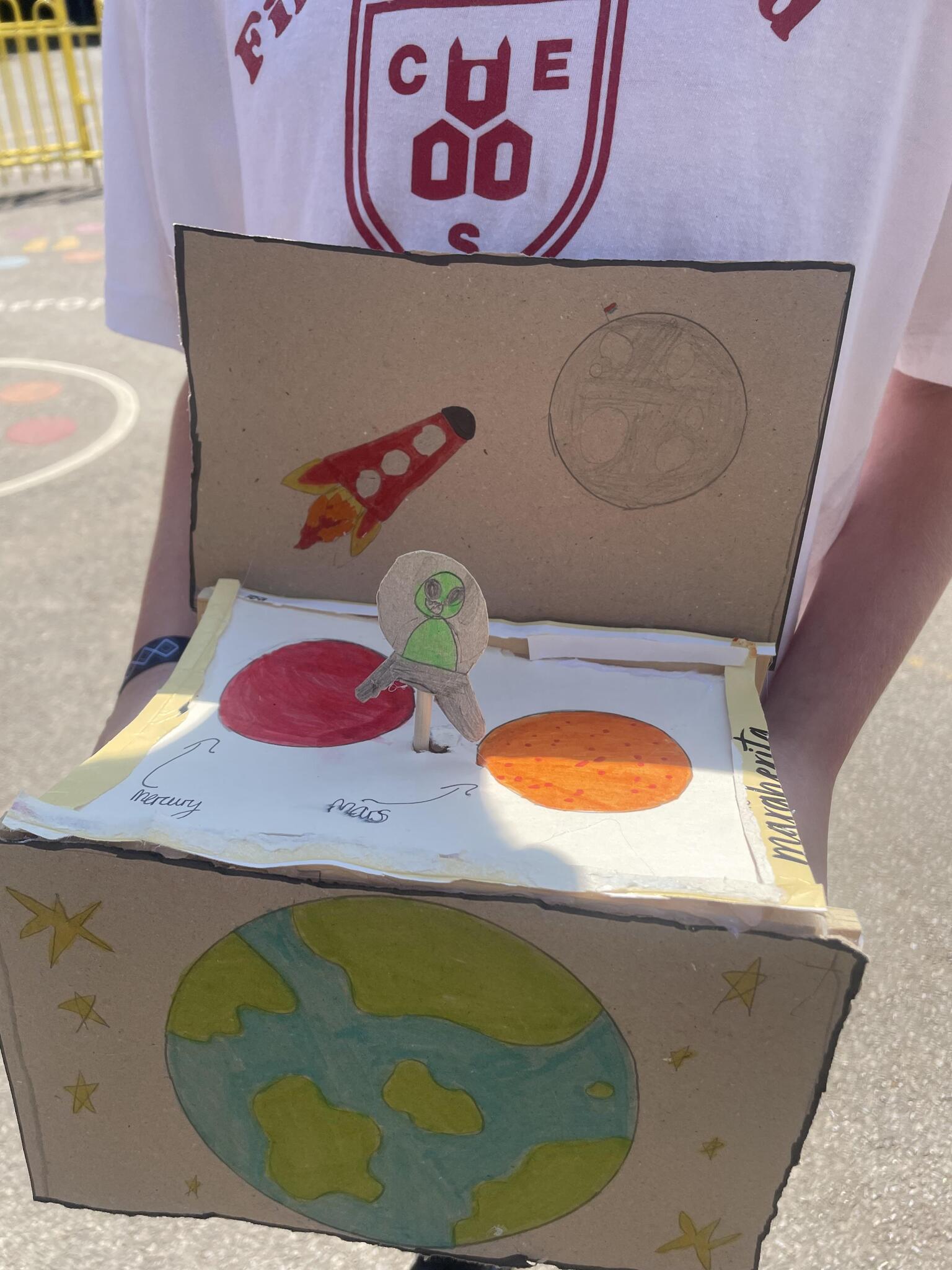
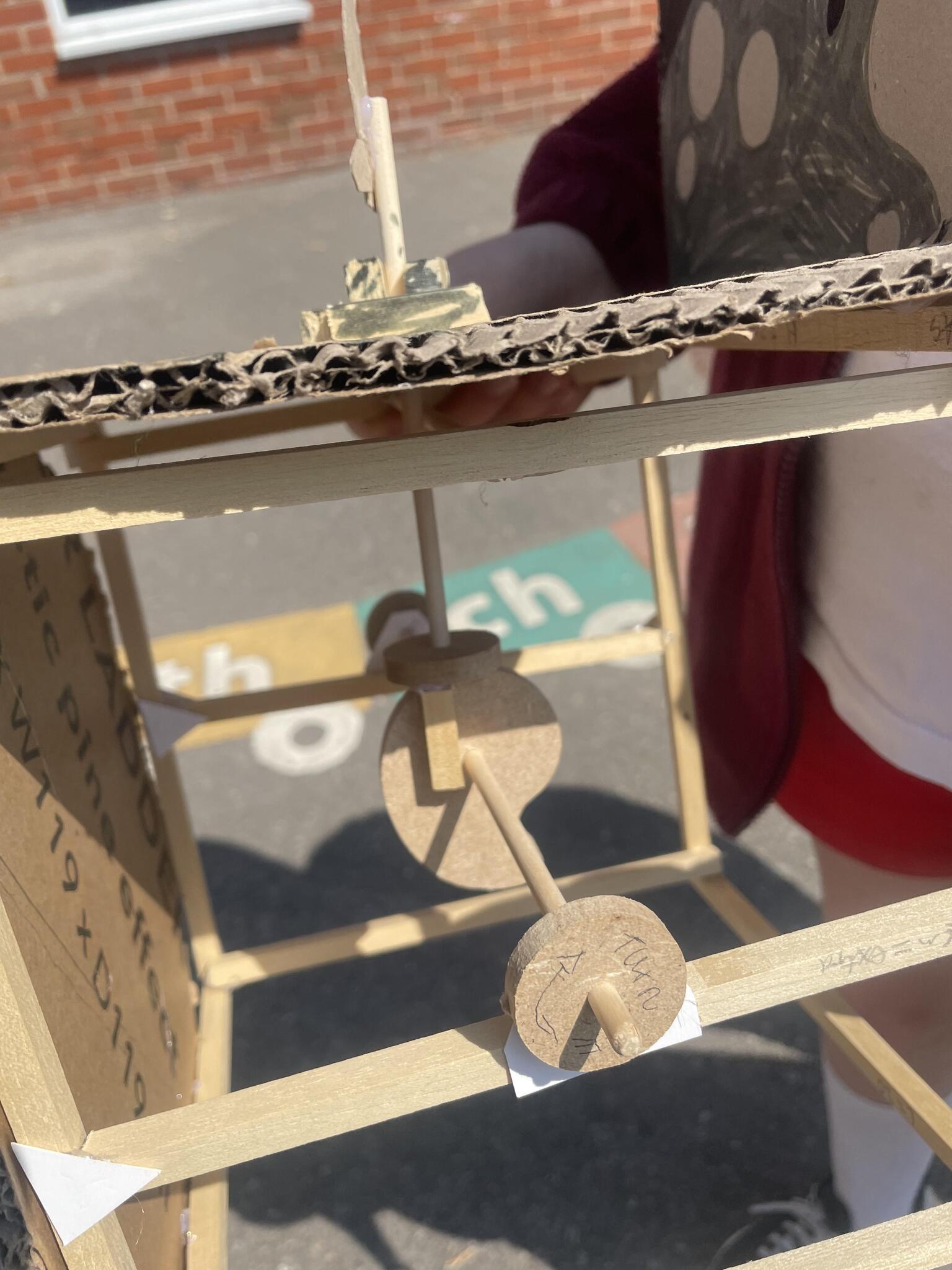
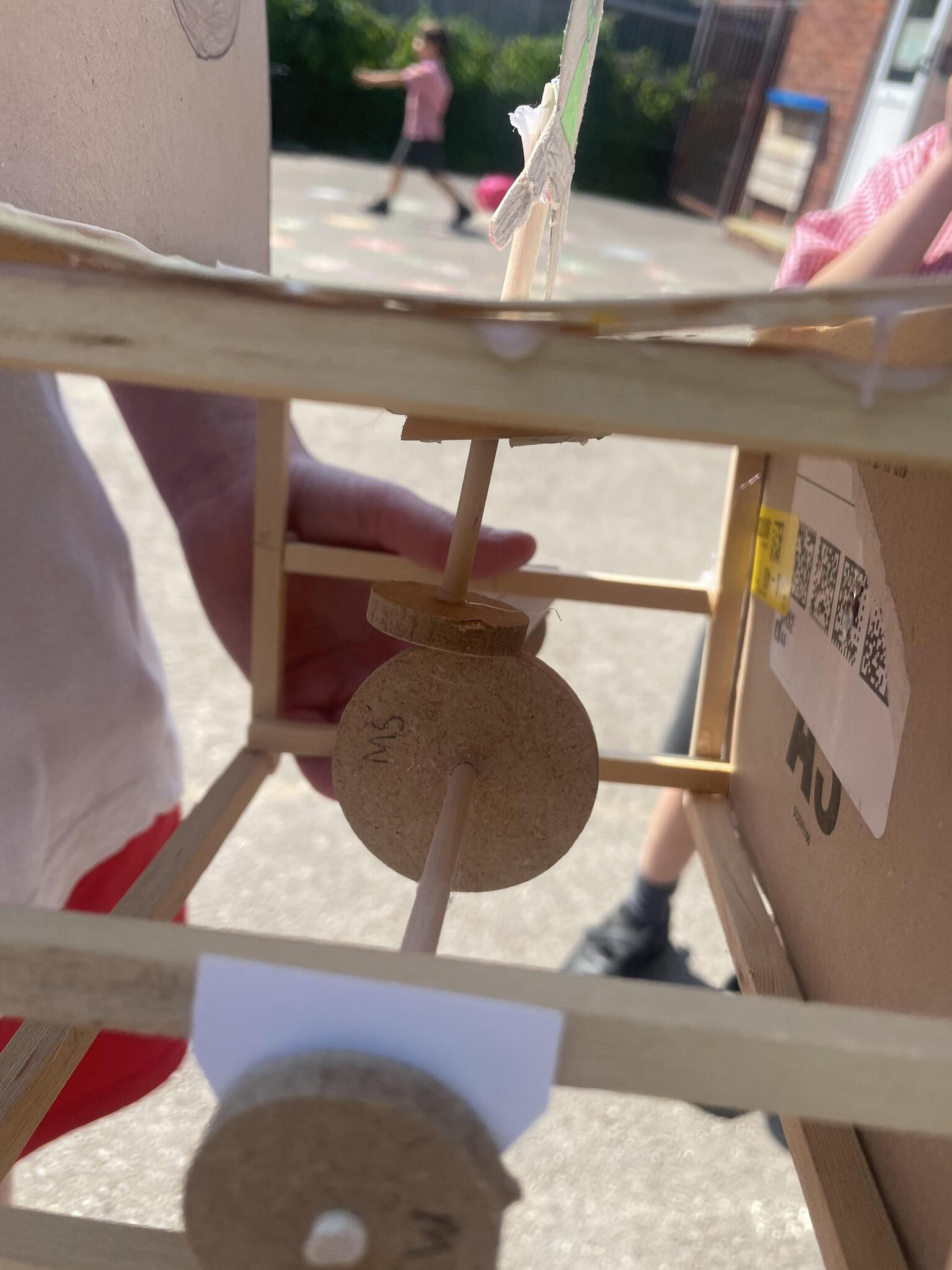
Goldfinch Class (Spring 2021): Our moving mechanisms project had a Space Theme ranging from the solar system to Star Wars and Among Us. We investigated the movement of different cam mechanisms before designing and building our own frames to house our moving mechanisms. Our classroom was extremely industrious all week. Lots of us felt like this was 'proper DT!'.
Come Dine with Me: Ancient Greece. For this DT project, the children researched the food that would have been eaten by the ancient Greeks, before planning and considering the health benefits of their own ancient Greek menus. The whole school smelt delicious with the mouth watering aromas that came from the children's kitchen. But, it is certain that the best part was tasting and evaluating each other's menus. Some of us even went on the investigate contemporary Michelin chefs from Athens who have added a a modern twist to Greek cooking.
Content pending