Our school vision
"This is the day that the Lord has made, let us rejoice and be glad in it." Psalm 118
Our curriculum vision for MFL
At our school, we believe that learning a foreign language provides children with a valuable opportunity to develop curiosity, confidence and an appreciation of different cultures and communities. We aim to foster a love of language learning and help pupils understand their role as global citizens in an increasingly interconnected world. From Reception, children learn to greet each other in a wide range of languages while doing the register, developing curiosity about people in the wider world.
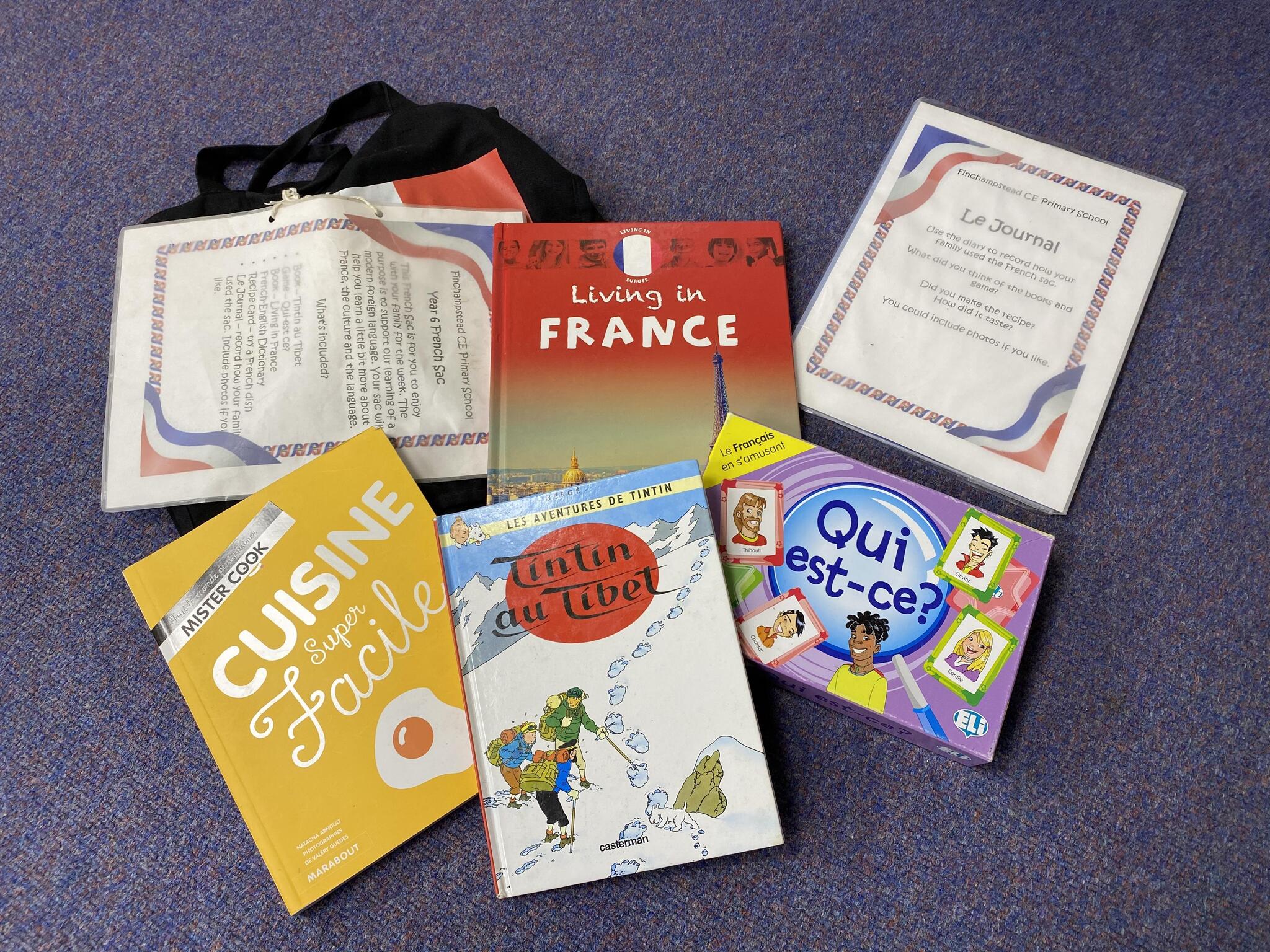
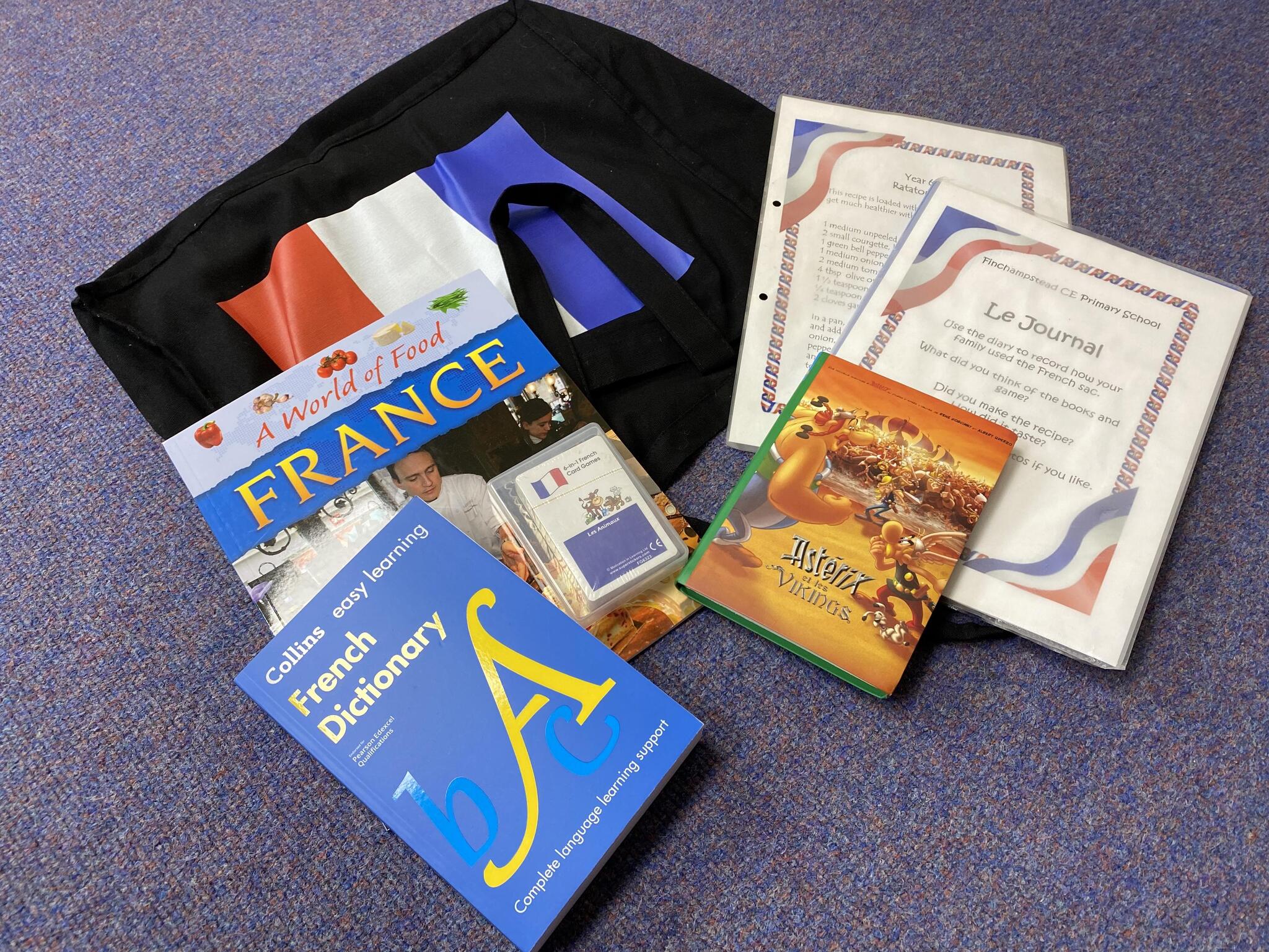
At Finchampstead School, the children learn French more formally throughout Key Stage 2 with a focus on listening and speaking. We aim to encourage enjoyment and confidence in language learning, hopefully inspiring children to go on to secondary school feeling positive and open to learning a wider range of languages available. With its roots in Latin, we can investigate etymology and the many similarities between French and English. In Key Stage 2, the children are encouraged to share their language learning with their families by taking home their Year group’s French sac containing recipes, games and books. Every summer, the children in year 6 run a French cafe to raise money to buy further French language resources.
Through the teaching of French, pupils develop their speaking, listening, reading and writing skills whilst gaining an understanding of the culture and traditions of French-speaking countries. We want children to enjoy learning languages, communicate with increasing confidence and accuracy, and develop the foundations needed for future language learning at secondary school and beyond.
Our curriculum is delivered through the Sue Cave Languages Scheme of Work, which provides a clear and progressive sequence of learning across Key Stage 2 with a special emphasis on delivering learning to mixed age classes.. The scheme has been specifically designed to support the teaching of primary languages and includes carefully planned lessons, embedded phonics, vocabulary progression and opportunities for regular recall and retrieval practice.
Our aims are for pupils to:
- Develop confidence in speaking and listening to French.
- Communicate using words, phrases and simple sentences.
- Build a secure and progressive knowledge of vocabulary and grammatical structures.
- Improve pronunciation through a structured phonics approach.
- Develop an understanding of French culture and traditions.
- Foster positive attitudes towards language learning and cultural diversity.
- Prepare successfully for language learning at Key Stage 3.
Implementation
French is taught throughout Key Stage 2 using the Sue Cave Languages Scheme of Work. Lessons are carefully sequenced to build on prior learning and ensure progression in both knowledge and skills. The scheme provides content for weekly language lessons from Year 3 to Year 6 and has been designed to meet the requirements of the Key Stage 2 Programme of Study.
Progressive Language Learning
The curriculum develops pupils' skills in:
- Speaking and pronunciation
- Listening and understanding
- Reading
- Writing
- Grammar
- Language learning strategies
Vocabulary and grammatical concepts are revisited regularly to strengthen retention and deepen understanding. Children are encouraged to apply previously learned language in new contexts, enabling them to become increasingly confident communicators.
Phonics and Pronunciation
A key strength of the Sue Cave Languages approach is its emphasis on phonics. Through the use of "Physical French Phonics", pupils learn the sounds and patterns of the French language, helping them to develop accurate pronunciation and confidence when speaking aloud.
High-Quality Resources
Teachers use a range of interactive resources, audio recordings by native speakers, songs, rhymes, stories and speaking activities to engage pupils and support language acquisition. These resources ensure that children hear authentic pronunciation and experience language in meaningful contexts.
Retrieval and Recall
Regular opportunities are built into lessons for pupils to revisit previously taught vocabulary and structures. This retrieval practice strengthens long-term memory and helps children make connections across different areas of learning.
Cultural Understanding
We believe language learning should broaden children's understanding of the world. Alongside learning French, pupils explore aspects of French culture, traditions and everyday life, helping them develop respect for and appreciation of different cultures and communities.
Impact
By the time pupils leave our school, they will:
- Have a secure foundation in French language learning.
- Demonstrate increasing confidence when speaking and listening in French.
- Read and write simple phrases and sentences with growing accuracy.
- Apply their knowledge of phonics to support pronunciation and understanding.
- Appreciate the cultures and traditions of French-speaking communities.
- Show enthusiasm, resilience and curiosity when learning languages.
- Be well prepared for the next stage of language learning at secondary school.
Through our carefully sequenced curriculum and the high-quality teaching supported by the Sue Cave Languages Scheme of Work, pupils develop the linguistic knowledge, confidence and cultural awareness needed to become successful language learners and global citizens.

Children in KS2 have the opportunity to take home a French sac appropriate to their year group. They may keep this for a week to read the books, try the recipes and play the games. They add to the journal to show what they enjoyed about the sacs.
Implementation
- The lesson plans are designed to be 30 minutes in length for Years 3/4. There are follow-up activities to each lesson to increase the exposure time in a week
- Lessons are planned over a two year cycle to allow for learning in mixed age classes.
- The lessons are designed to be progressive and build on prior learning, moving from word to sentence level over the four years
- In Years 3 and 4 the same structures and grammatical knowledge are revisited in both cycles, however, the vocabulary is different.
- The lesson plans include ideas for support for the less able and to extend the more able
- The lesson activities are challenging, varied and interactive and develop listening, reading, speaking and writing skills
- Interactive whiteboard resources with audio support are provided; purchase of a set of storybooks and phonics book is a requisite to access the scheme and additional resources are recommended particularly for songs and rhymes
- The choice of vocabulary ensures exposure to all the key phonic sounds and ability to build sentences using grammatical knowledge
- Who teaches the scheme to ensure high quality lessons is at the discretion of the school but linguistic up-skilling and methodology training is available to support its delivery as well as detailed lesson plans linked to ready-made resource templates and audio recordings of stories and rhymes read by a native speaker
- It is expected that formative assessment in each lesson informs the planning and teaching of subsequent lesson plans.
Goldfinch class loved sharing the French books they had written ( Le Monstre a Faim ) with the children in Rosefinch class.
Summer 2022: After two years of Covid restrictions, Year 5 and 6 were excited to be hosting the French cafe at the summer open evening. They practised their key phrases and prepared the French menus ready for their customers.
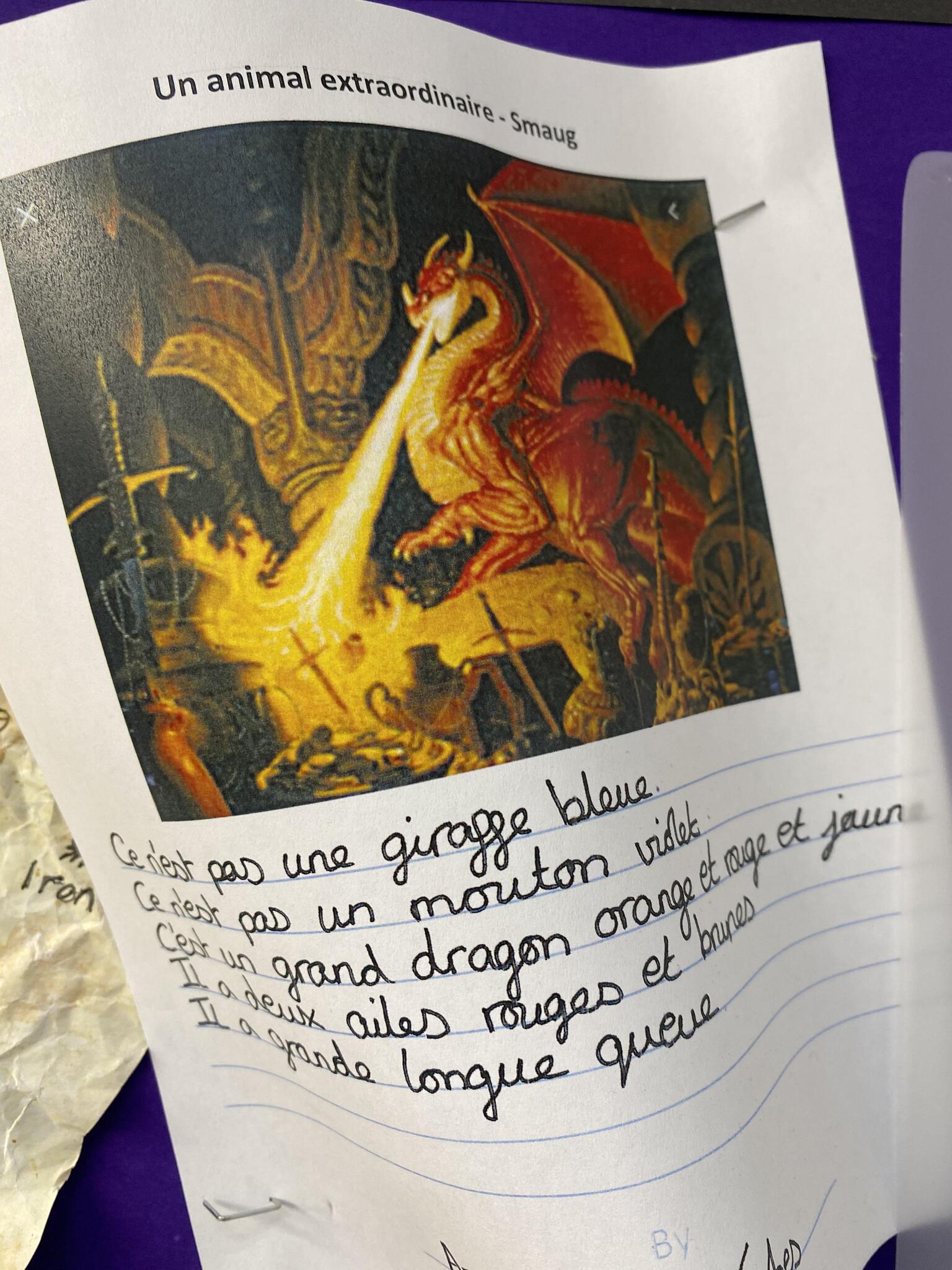
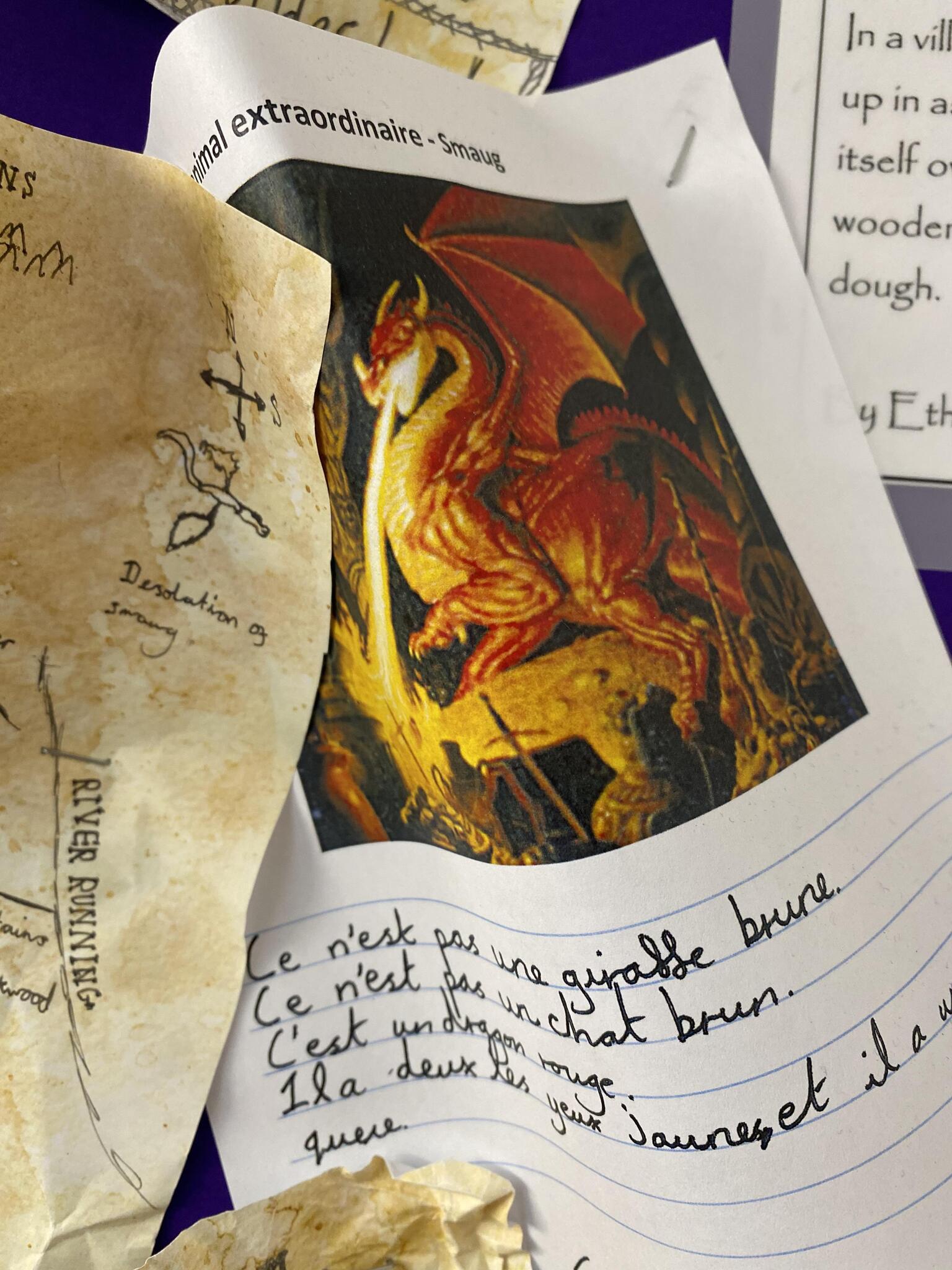
Goldfinch class loved reading The Hobbit. They described Smaug in French making sure that their nouns and adjectives agreed.
October 2022
It was a pleasure to talk to some of the KS2 children today about their French lessons. They were an enthusiastic group who were very positive about learning languages.
What do you enjoy about learning French?
Y6 - I've enjoyed learning colour names and using them to describe animals. I like being able to say things in other languages.
Y5 - The French sacks are fun. I like learning to make French food. The songs are the best part - they help you remember the French words.
Y4 - We've learnt words like stand, sit, look, listen. It's good to keep saying the words again and again to help you remember them.
Y3 - We like finding out what French words mean. I like the French sac - it was fun making the crepes and playing the games.
What did you learn in your last lesson?
Y6 - We learnt a French song to remember the colours. We learnt the feminine words for colours.
Y5 - We learnt how to describe animals with colours.
Y4 - We have learnt commands.
Y3- We learnt to count to 5.
Why is it important to learn to speak another language?
It helps you with some jobs.
You can do a language degree at university.
It's nice to speak a language when you go on holiday.
It helps you learn to speak other languages: French, Spanish and Italian are all Latino languages and are similar.
My dad speaks Spanish and it's good when you are in another country that speaks Spanish.
When is it easy and when is it hard? What helps you?
Y6 - It's easy when I can use my knowledge from last year but it's trickier to put it into a new sentence. We can look at the board for examples to help us.
Y5 - I can remember colours because it's in my vocabulary book. The French dictionary is really useful.
Y4 - the songs are really helpful to make it easy to remember.
Y3 - songs make it catchy.
How do you know if you've done well in the lesson?
Y6 - The teacher gives us praise. If I can help others, I know I've done ok.
Y5 - We get positive comments and nods
Y4 - The teacher says tres bien.
What do you think you'll learn in the next lesson?
Y6 - we'll be describing more things.
Y5 - we need to have the right grammar to write sentences.
Y4 - I want to learn about French culture
Y3 - Maybe higher numbers like 5-10
Implementation
- The lesson plans are designed to be 45 minutes in length for Years 5/6. There are follow-up activities to each lesson to increase the exposure time in a week
- Learning in year 5 and 6 is planned in two-year cycles due to the children learning in mixed age classes.
- The lessons are designed to be progressive and build on prior learning, moving from word to sentence level over the four years
- In Years 5 and 6 some of the same structures are revisited but only by completing the two year cycle will all the knowledge and skills be covered
- The lesson plans include ideas for support for the less able and to extend the more able
- The lesson activities are challenging, varied and interactive and develop listening, reading, speaking and writing skills
- Interactive whiteboard resources with audio support are provided; purchase of a set of storybooks and phonics book is a requisite to access the scheme and additional resources are recommended particularly for songs and rhymes
- The choice of vocabulary ensures exposure to all the key phonic sounds and ability to build sentences using grammatical knowledge
- Who teaches the scheme to ensure high quality lessons is at the discretion of the school but linguistic up-skilling and methodology training is available to support its delivery as well as detailed lesson plans linked to ready-made resource templates and audio recordings of stories and rhymes read by a native speaker
- It is expected that formative assessment in each lesson informs the planning and teaching of subsequent lesson plans