
Finchampstead C of E (Aided) Primary School
Parent information - Supporting your child
Attendance Information
Phonics and Early Reading meeting information
Please find the Powerpoint presentation for our meeting about phonics and early reading (including video links). We hope you found this useful and we hope to re-run it in the Autumn term for new families and those who were unable to make it today. We will be sending home a leaflet with hints and tips. Look out in your child's bookbag! Any further questions, comments or queries please don't hesitate to ask.
It was a pleasure to welcome Kathy Smedley, our ICT consultant from the Wokingham team who came to share information and advice with parents about keeping our children happy and healthy online. There was lots of food for thought and a chance for parents to share their thoughts and ideas afterwards. We asked the parents who attended to share a key piece of information they felt it would be useful to pass onto other parents:
"Have open communication and show an interest in what your child is doing."
"Consider how to limit screen time."
"No tech such as phones in bed at night."
"Set boundaries early on - helpful now with a teenager who understands why."
"Explain that primarily, you love your child and want to make sure they are safe and happy. Talk through any decisions with them. Revisit decisions regularly and let access grow with your child."
"Talk to your child about how it makes them feel - positives and negatives."
"Make sure you keep track of devices and change pin codes regularly. Don't have the same pin code for everything."
"Be aware when setting up social media accounts that giving the date of birth which makes your child older to create an account means that they will be exposed to adult content much sooner based on the date of birth given."
https://www.thriveapproach.com/news/children-grief?utm_campaign=Edco_9thsep_grief&utm_medium=direct&utm_source=email&utm_content=Edco_9thsep_grief&utm_term=Edco_9thsep_grief&dm_i=71HF,9JTB,287FZO,15BLK,1
Reading Well For children - Beautiful books to help children with wellbeing and mental health:
Reading Well for children is a booklist of expert endorsed reading to support children. The list is targeted at children in Key Stage 2 but includes titles aimed at a wide range of reading levels to support less confident readers, and to encourage children to read together with their siblings and carers. Developed by charity The Reading Agency (www.readingagency.org.uk) in partnership with Libraries Connected and the UK public library network, Reading Well is a national books on prescription programme that provides helpful reading to support health and wellbeing.
How Reading Well works
- Browse the booklist https://reading-well.org.uk/books/books-on-prescription/children
- The books are available to borrow from our libraries. You can request them with our Click and Collect service or download from our Online Library.
The booklist of 33 titles covers general information and advice about: maintaining good mental health and wellbeing; understanding and managing feelings; dealing with worries; navigating the world around you, including at school, online and in the news; dealing with tough times, including when someone dies, trauma, and when a parent or carer has mental health needs; and support for living well with specific diagnosed conditions including Attention Deficit Hyperactivity Disorder (ADHD), Autism Spectrum Disorders (ASD), Obsessive Compulsive Disorder (OCD) and physical disabilities.
The books are available to borrow from our libraries or download from our Online Library.
Help for Children and Parents Mental Health
Helping a child with Dyslexia
Celebrating Birthdays in School
We have introduced a fantastic new way of celebrating children’s birthdays now we can no longer share gifts from home. We would like children to donate a book to their class for their birthday, rather than bringing in sweets or cakes. This is a lovely way for the children to enjoy something that will last, and will benefit the class for the rest of the year. Any book will be gratefully received but if you’d like some ideas there is a list of titles per year group attached below.
When your child brings in a birthday book, we will add a book plate at the front with their name and age, and put on a protective cover before the book goes into the class library.
This is, of course, completely optional and we will continue to celebrate birthdays by singing (outside) and making them feel special.
List of books by year group
Parents' Guides to Supporting Children Online
Online safety
Use these resources to support parents and carers to keep their children safe online:
- Thinkuknow provides advice from the National Crime Agency (NCA) on staying safe online
- Parent info is a collaboration between Parentzone and the NCA providing support and guidance for parents from leading experts and organisations
- Childnet offers a toolkit to support parents and carers of children of any age to start discussions about their online life, to set boundaries around online behaviour and technology use, and to find out where to get more help and support
- Internet matters provides age-specific online safety checklists, guides on how to set parental controls on a range of devices, and a host of practical tips to help children get the most out of their digital world
- London Grid for Learning has support for parents and carers to keep their children safe online, including tips to keep primary aged children safe online
- Net-aware has support for parents and carers from the NSPCC, including a guide to social networks, apps and games
- Let’s Talk About It has advice for parents and carers to keep children safe from online radicalisation
- UK Safer Internet Centre has tips, advice, guides and other resources to help keep children safe online, including parental controls offered by home internet providers and safety tools on social networks and other online services
We are often asked to recommend books for different year groups. Check out these 'Top 50 Recommended Reads' for your child:
Recommended Christmas Reading - want a good book to relax with? Try one of our suggestions :
Holiday passport, please complete during summer and bring your passport to show us in September.
Supporting MFL in the School: KS2 French Sacks
Through your generous support at last year's French Cafe, and through FOFSA, we are delighted to be sending home the KS2 French Sacks this week. There is a bag for each year group in KS2 and children will take it in turns to have the bag for a week. The first children will be bringing home the bags this week.
The French Sacks are a way of promoting MFL in school. Each contains some books, a dictionary, a game and a traditional French recipe card. As a family, you might like to try some of the activities and leave a comment or some photos in the journal. Further details are attached to the bags.
Thank you again for your support which have made these bags possible. Merci!

Left to their own devices? - Confident Parenting in a World of Screens
Supporting your Child with Multiplication tables.
On Tuesday 13th November 2018, the Multiplication Tables Check Assessment Framework was published by the Standards and Testing Agency (STA). The aim of the framework document is to provide guidance to the test developers to help them develop fair and robust tests, but it also provides an excellent guide to what schools and teachers will be expected to have taught their pupils.
Assuming it gets parliamentary approval, the check will not be statutory until June 2020.
This means that our current Year 4 pupils do not have to complete the check, but that our current Year 3 pupils will have to complete the check.
It is therefore important to ensure that our Year 3’s develop fluency in their multiplication facts this year. The curriculum suggests that by the end of Year 3, children should be fluent in the 2,3,4,5,8,10 times tables.
In school, we are working hard to develop and maintain children’s fluency with their multiplication tables with activities such as the Table Mountains. You can support your child at home by encouraging them to practice little and often – 5-10 minutes a day would help them to learn ( and more importantly, retain) their knowledge of times tables facts. Rote learning can be useful but it is better for children to know the facts in random order to be quicker at answering questions. This is where flashcards can be helpful as they can be shuffled for random practice.
It’s been confirmed that test will be fully digital and take place on screen. It will be available to use on laptops, desktops and tablets. To give you an idea of what the Multiplication test will look like and the speed with which the children will be expected to answer questions, use the following site. It may be useful as part of the children’s daily practice and can be used on tablets or PCs.
https://mathsframe.co.uk/en/resources/resource/477/Multiplication-Tables-Check
Spelling difficult words - Make it an acrostic
Some words just don't follow a pattern and may be hard to sound out. Sometimes, visualising a difficult word in a different way can suddenly make it stick. Create a phrase from each letter of a word and turn it into an acrostic, which can be easier to remember than the word itself. Try these, or have your child make up their own!
Because:
Big
Elephants
Can
Always
Understand
Small
Elephants
Ocean: Only Cats’ Eyes Are Narrow
Rhythm: Rhythm Helps Your Two Hips Move
Necessary: Never Eat Chips Eat Salad Sandwiches And Raspberry Yoghurt
Or. as we learned from one of the Chaffinch children this week, you can use an acrostic to help recall just a difficult part of a word. For beautiful the eau pattern is hard to remember but not if you know that beautiful elephants and unicorns can help!
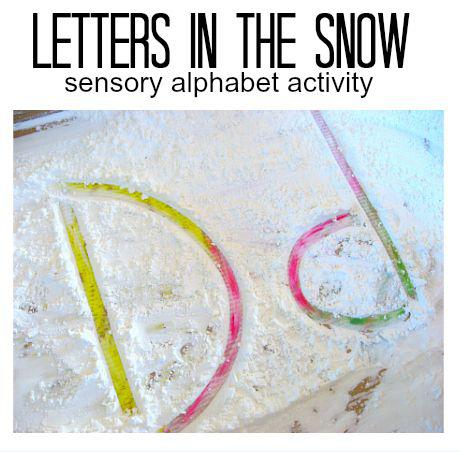
Spelling idea of the week:

Please let us know if you enjoy this spelling art idea!
Mrs Dodds is looking for other innovative ways to help learn your weekly spelling patterns. please let her have your ideas so she can share them on this page.